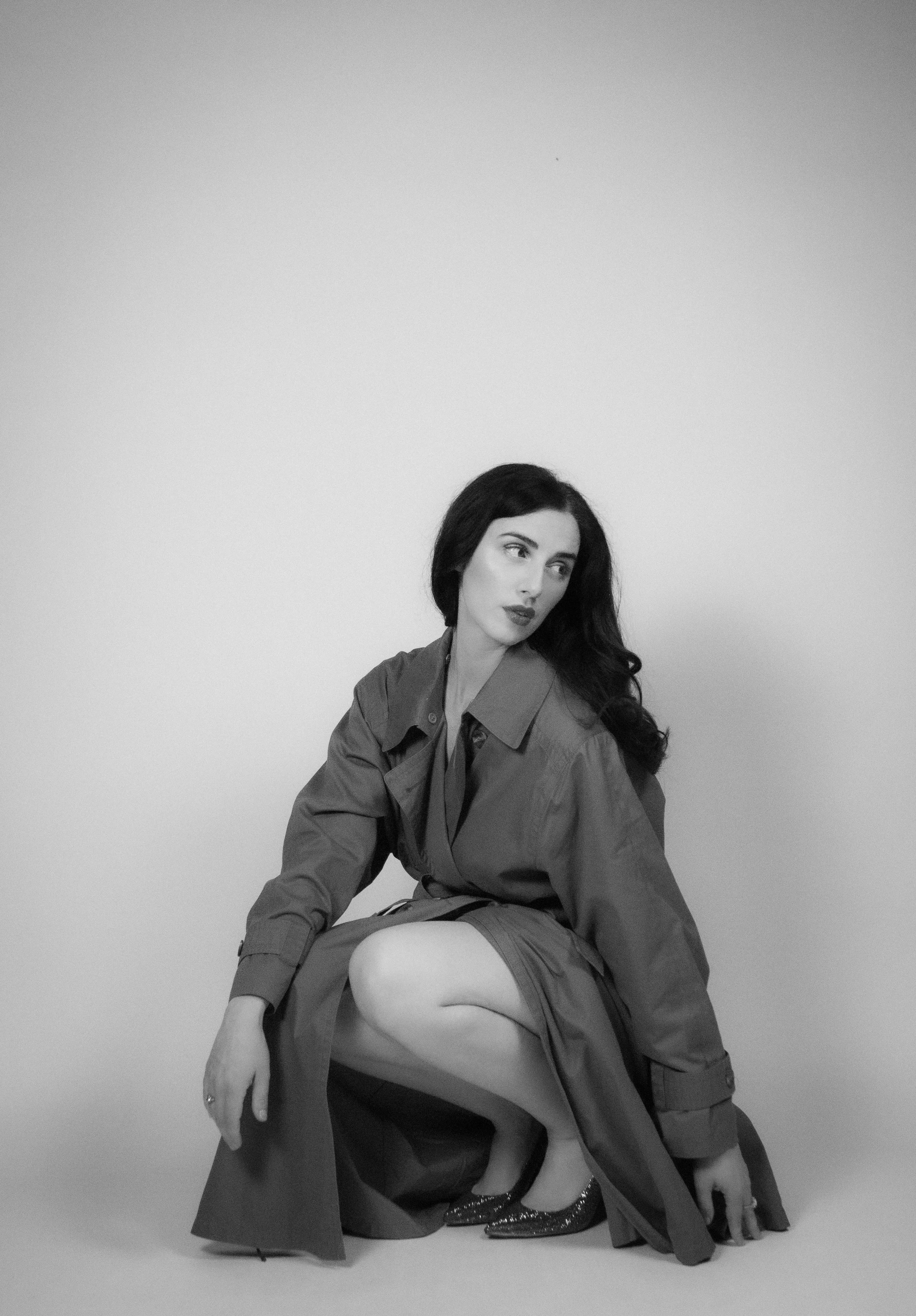
SHELBY KEMPER
Every songwriter has a version of themselves they’ve had to outgrow.
For some, it’s a genre. For others, a scene.
For Shelby Kemper, it was everyone else’s song.
Los Angeles-born and Nashville-based — a valley girl living in music city — Kemper is a singer-songwriter and vocalist whose music lands somewhere between Lana Del Rey’s quirky intimacy and Adele’s plainspoken, unguarded vocal: a pure storyteller’s voice, close and unhurried.
She’s been present in the music world longer than most people realize.
She grew up in front of the camera, working as a child actress under her full name, before the performing arts pulled her in every direction at once.
What eventually won out was music — and her acting training made her a natural demo singer, with an instinct for a song’s emotional core and the precise mood it needed to live in.
That instinct took her into some of the most demanding rooms in the industry.
She co-wrote “Make Up,” the all-English B-side of SixTONES’ number-one Japanese single Mascara, alongside J-Que (Usher’s “Yeah”) and Grant Boutin (Tate McRae).
She sang on Rüfüs Du Sol’s “Treat You Better.”
She co-wrote across Sophie Powers’ debut album with producer Mike Gonnek.
For a stretch, she and her sister recorded as Kemper Sisters, a duo project that pulled her into original songwriting alongside some of the most talented people she’d ever worked with — including a Grammy-winning mastering engineer best known for Billie Eilish — and spun off the sync alias Elder Sister, the name behind her placements on Fox’s Monarch and Apple TV’s The Morning Show.
The moments Kemper returns to, though, are quieter than any credit.
Living rooms of artists she admired.
Late California nights with producers gathered around a speaker.
The feeling of a room shifting — really shifting — on a single note sung with sincerity.
“I realized early on,” she says, “that sincerity moves people in ways that clout never could.”
The last four years looked, from the outside, like a disappearance.
They weren’t.
Kemper didn’t move to Nashville to chase a career — she moved to pause one.
To figure out who she was without a brand to protect or a version of herself to perform.
The music came back on its own, and it came back the way it first arrived: an upright piano, a pen and paper, golden hour through the window.
“Something about music keeps pursuing me, even when I’ve tried to walk away,” she says. “I needed to step back and decide if I even loved making music at all. Turns out, I do. There’s a sound inside of me — and I’ve finally agreed to let it out.”
“I sort of feel like I woke up and deeply loved making music again, after a several-year block. If you’re going to wake up feeling that way, Nashville is pretty wonderful. You can throw a rock and hit one of the most talented people you’ve ever met. I don’t throw rocks, I’m a lady. But still.”
What’s emerging now isn’t a rebrand.
It’s the first music she’s ever released under her own name — stripped back to voice, words, and piano, and written the old-fashioned way.
Life and love. Pain and heartbreak. Faith and hope.
Writing that sits somewhere between a confession and a letter home.
She isn’t in a rush.
She’s simply, finally, here.